Eco
Material must return value.
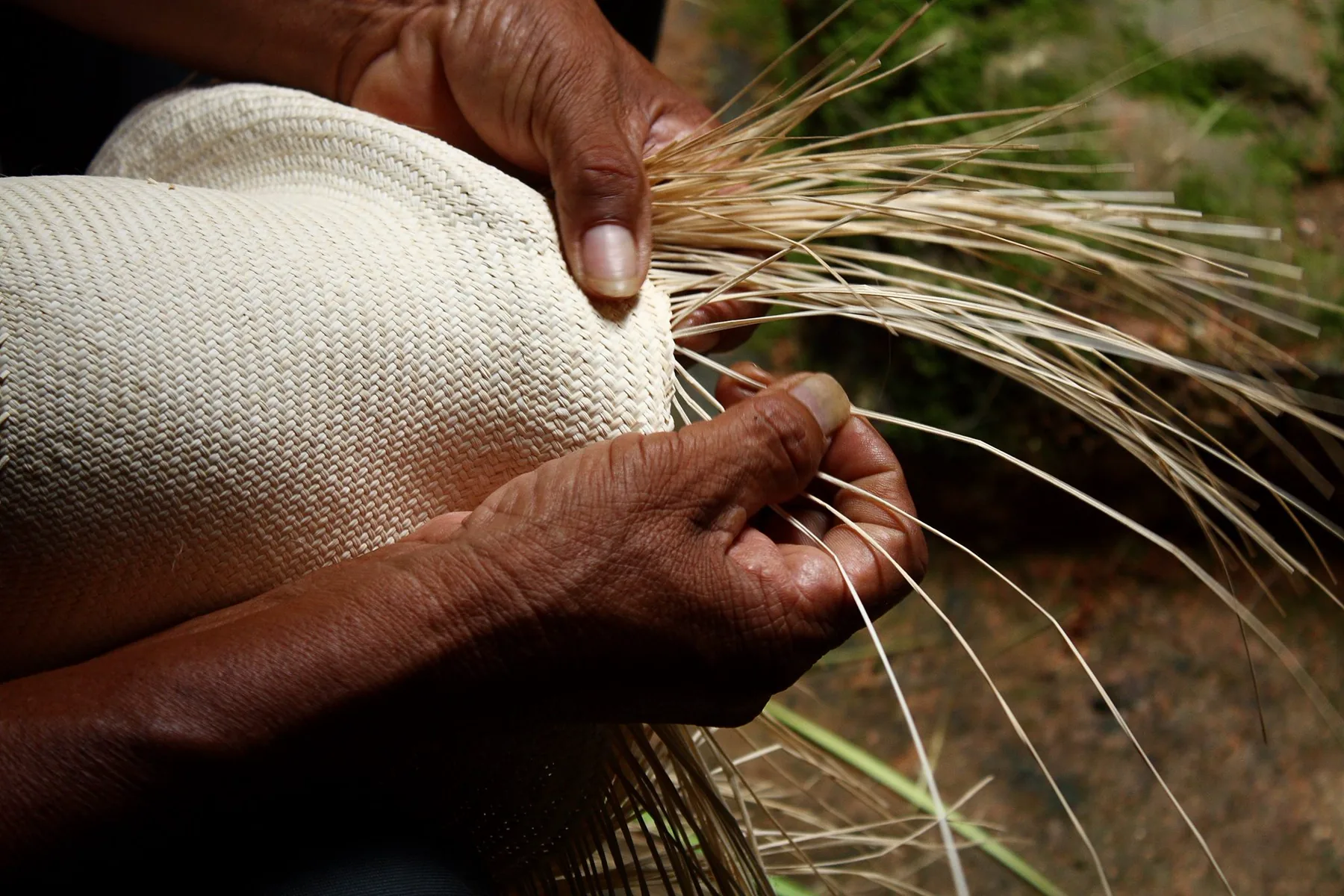
Leftover leaves from the hat process are treated as material for new accessories, keeping waste inside a reuse logic.
Eco Code
Toquilla origin, Ecuadorian handwork, fair commerce, social impact, Italian finishing, and care that keeps the hat in use.
Three concrete criteria
A responsible Panama does not begin at checkout. It begins with the toquilla palm, the tender fibre, the hand, the proportion, and the decision to keep the object alive across seasons.
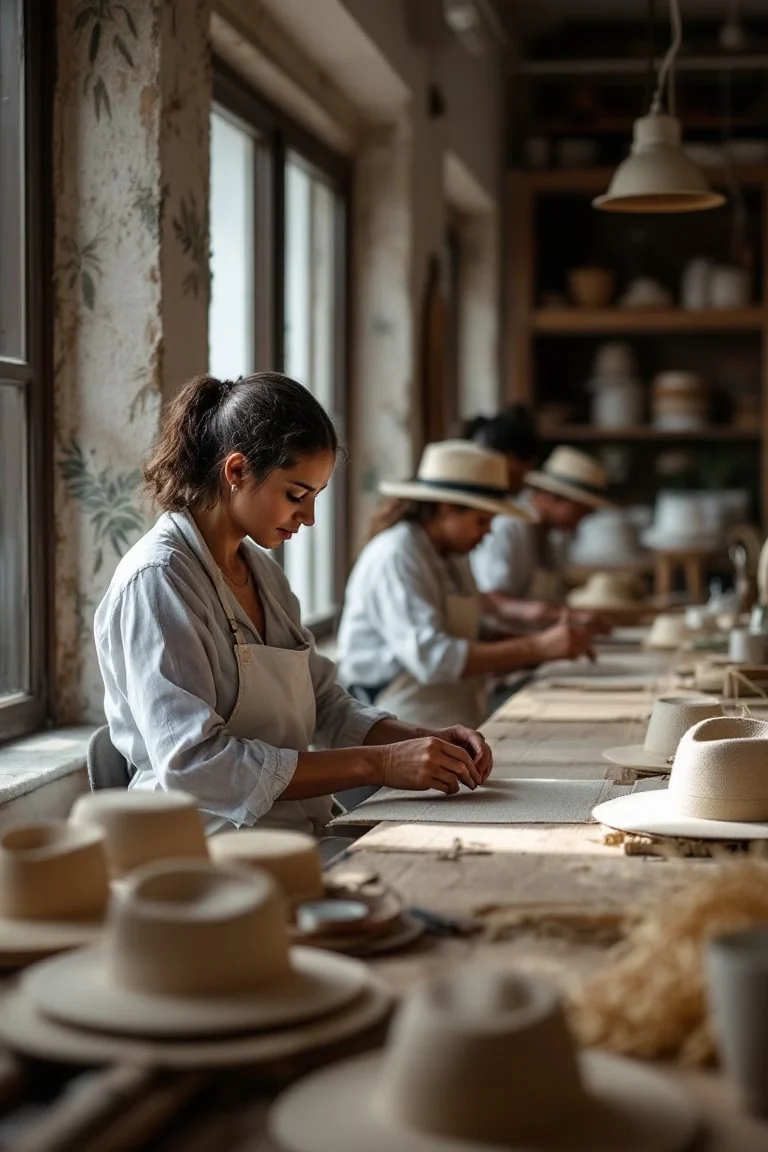
For PanamaHatters, responsibility means visible origin, readable handwork, repair culture, reuse, and respect for the artisan time inside each weave.
Eco
Leftover leaves from the hat process are treated as material for new accessories, keeping waste inside a reuse logic.
Fair
The source materials describe direct collaboration with local artisans in Ecuador and fixed-price purchasing independent of the model.
Impact
The house materials refer to about 350 artisans across 15 villages in the Simon Bolivar and Santa Elena regions.
Craft chain
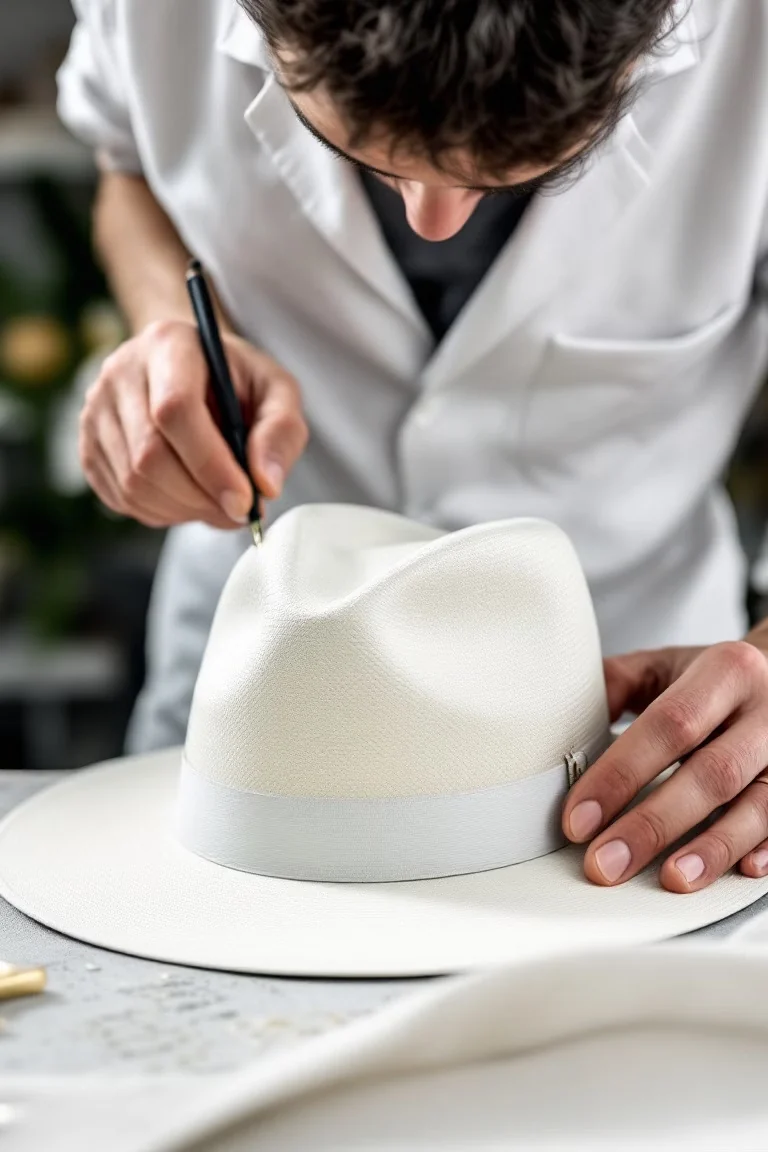
The chain is visual and practical: toquilla origin, tender fibre selection, a meticulous weaving process, Italian finishing, care, and second life.
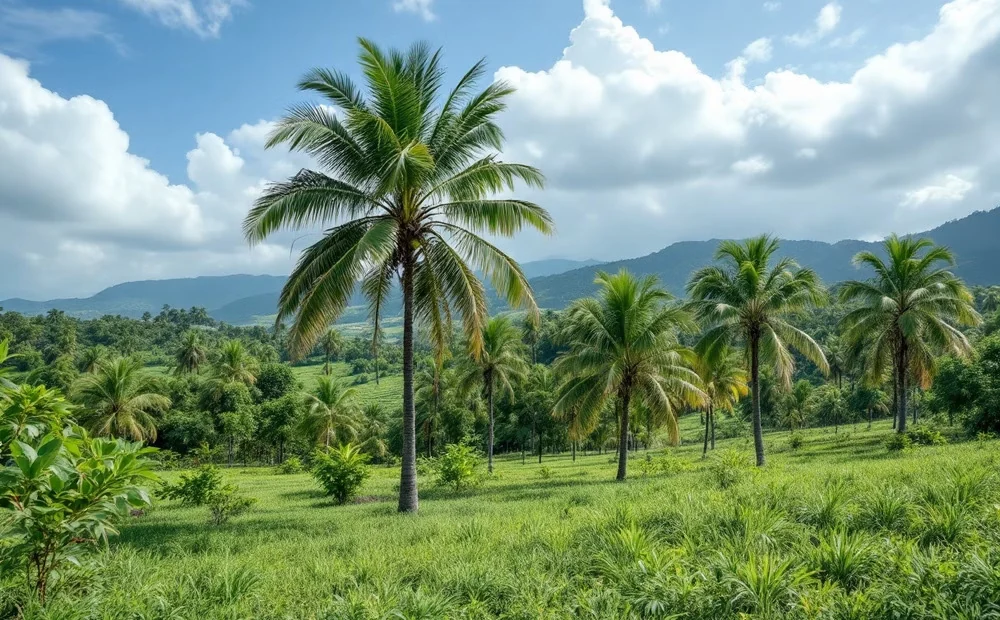
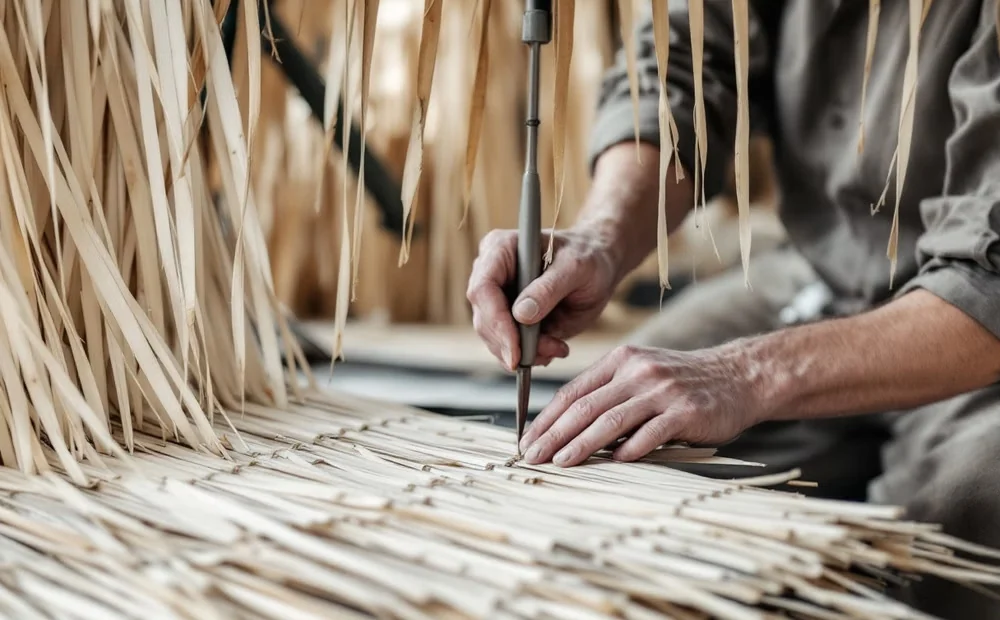
The original fibre comes from the toquilla palm cultivated in Ecuador. Only the softer fibres move forward into the finest work.
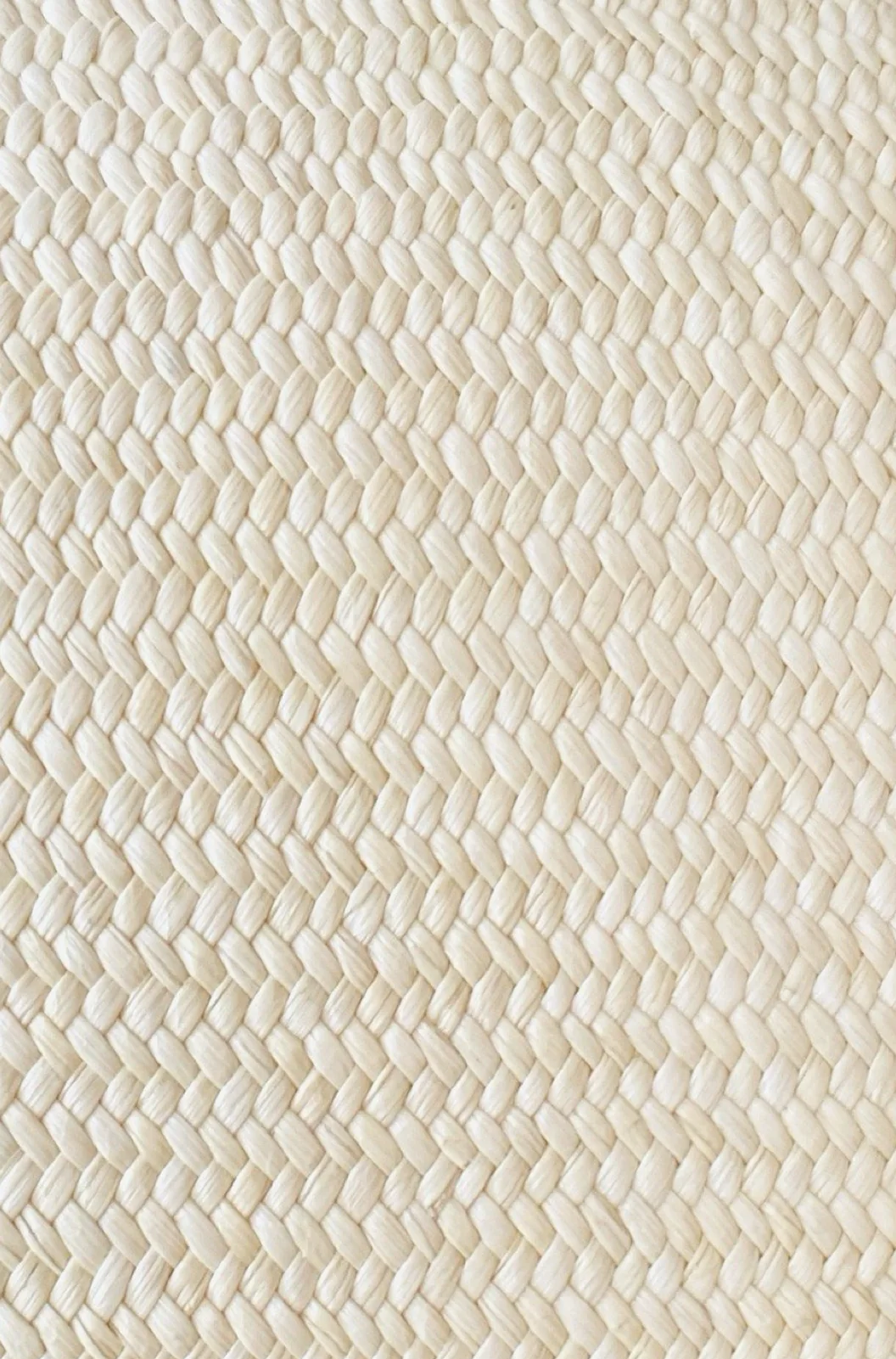
Montecristi is defined by an even horizontal and oval weave, where direction changes should not visually interrupt the surface.
Leaves left from production can be regenerated into accessories, so material value does not end at the brim.
Origin and impact
Craft, reuse, cultural respect, fair commerce, and social impact guide the chain. Not decoration: concrete criteria for choosing materials, partners, and processes.
Leaves left from hat production are regenerated to create accessories.
Collaboration with local artisans in Ecuador is treated as a direct relationship, not anonymous sourcing.
The program cites about 350 artisans in 15 villages across Simon Bolivar and Santa Elena.
Readable standards
No generic sustainability language. Only concrete choices the customer can understand before buying.
Declared Ecuadorian origin for original Panama hats and visible toquilla fibre story.
Direct artisan collaboration and fair-commerce language grounded in the house materials.
Social-impact commitment tied to the Simon Bolivar and Santa Elena artisan regions.
Reuse-first handling of leftover leaves and responsible packaging where available.
Care, reshaping, and repair guidance before replacement.
Next step
The Private Desk can advise on storage, fitting, reshaping, and the right product for a specific place or season.