MR. PANAMA

HE DID NOT CHOOSE A HAT. HE CHOSE THE WORLD BEHIND IT.

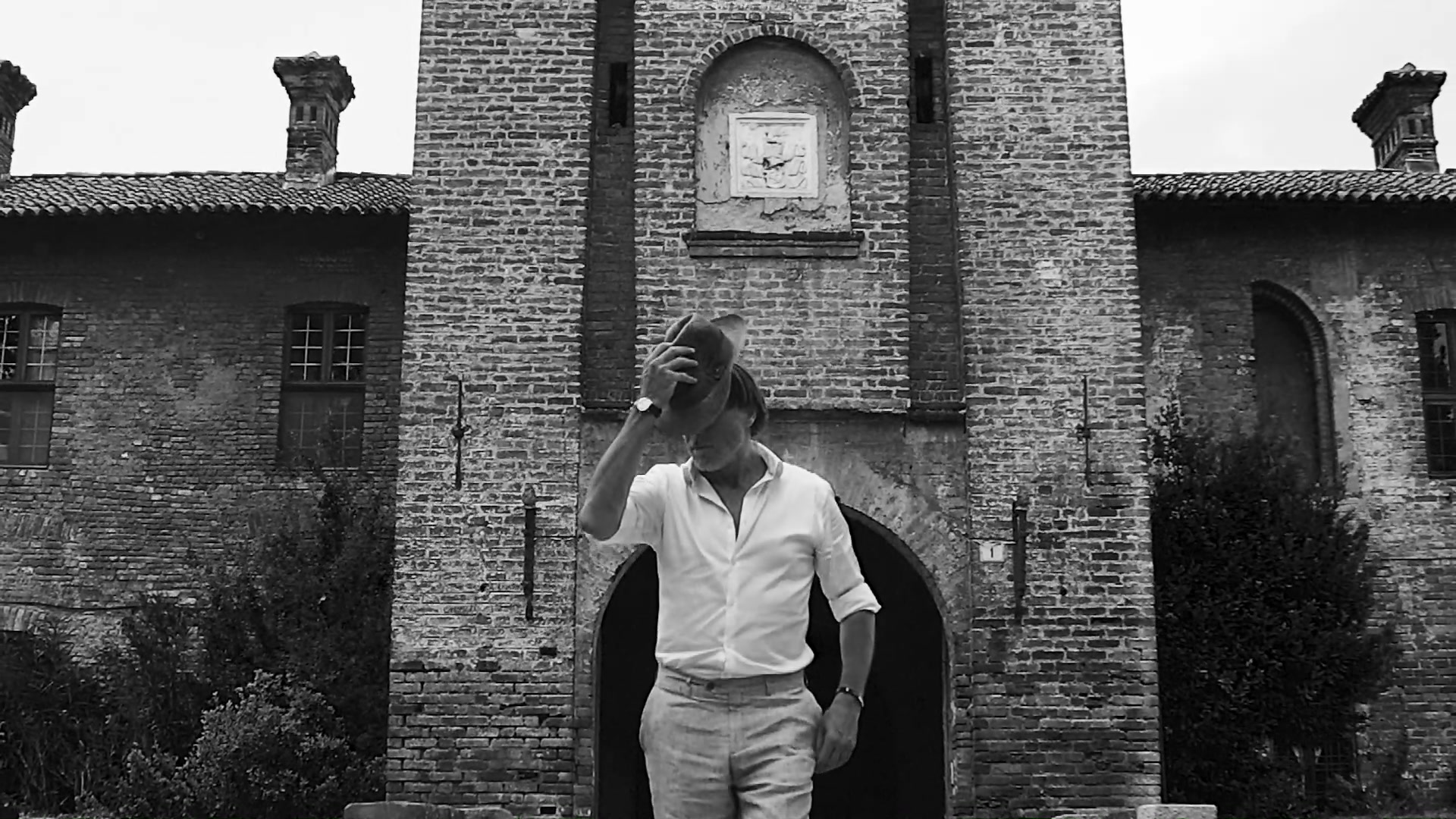
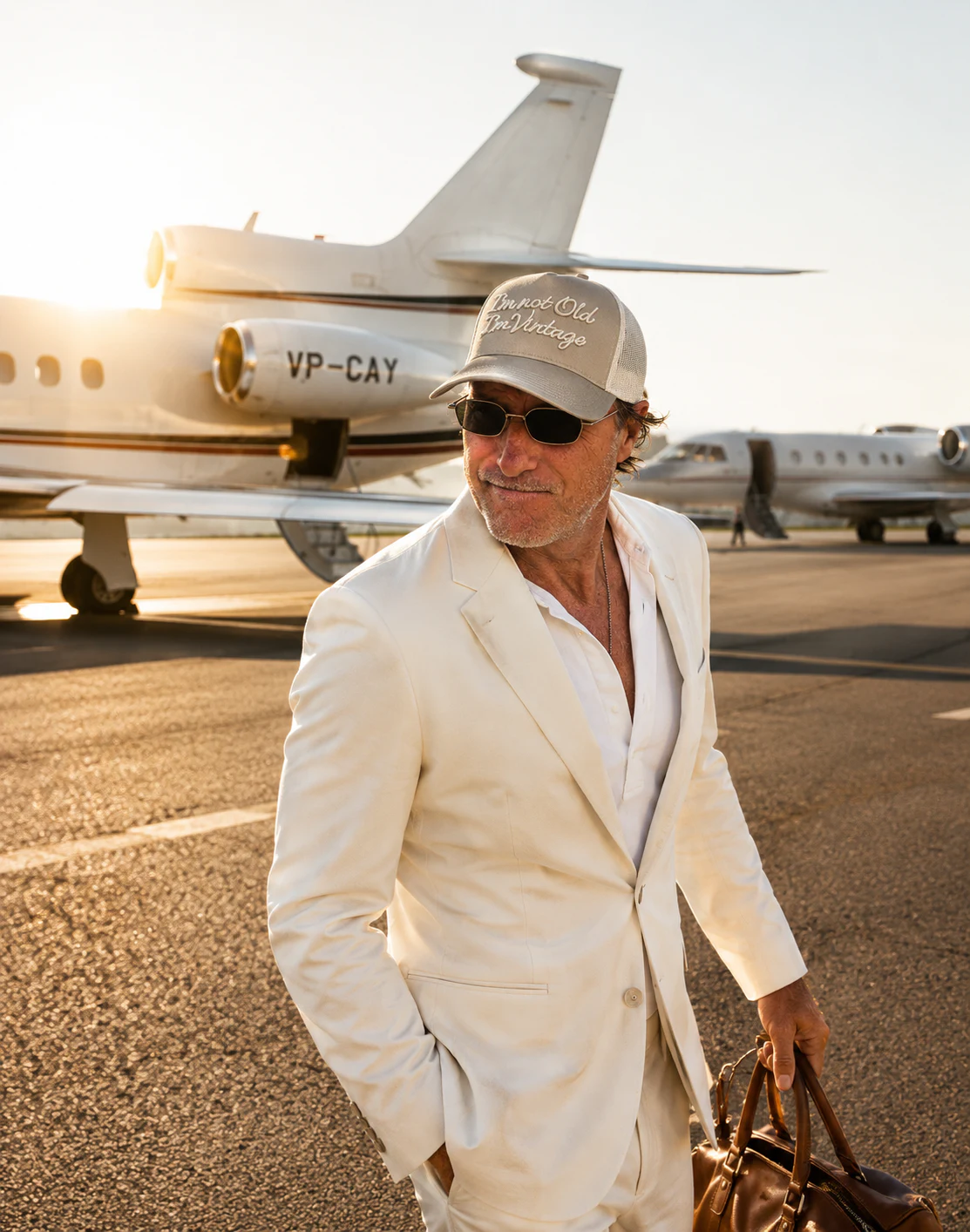
Before Panama Hatters, there was Marco.

A man shaped by fashion, photography, aesthetics and human relationships.

He had learned to notice what others overlooked.

How light could transform a face.

How proportion could redefine a silhouette.

How certain people could enter a room without ever demanding attention.

For years, he lived in a world built around style.

Yet he kept searching for something deeper.

Not simply something beautiful.

Something real.

Marco Tibiletti

THE BEGINNING

ONE EVENING IN MILAN.

It all began over dinner in Milan.

A conversation.

A few words about Ecuador.

A natural fibre.

A hat known throughout the world by the name of a country where it had never actually been born.

For most people, it would have remained an interesting story.

For Marco, it became a question he could no longer ignore.

Where does an authentic Panama hat truly begin?

A few phone calls followed.

Then a decision.

Within a month, Panama Hatters had a name.

At the time, it seemed almost impulsive.

Looking back, it was the beginning of a lifetime.

“What once looked like a moment of madness turned out to be the first true intuition of my journey.”

PHOTO REQUIRED — ECUADORIAN PANAMA WEAVING

2400 × 1800 px · 4:3 landscape

ECUADOR

RETURNING TO THE ORIGIN.

Marco never wanted to build a brand around something he did not fully understand.

So he followed the Panama back to where it truly began.

Ecuador.

Far from the rhythm of Milan, he entered a world where time moved differently.

Among drying fibres and hands repeating gestures passed down through generations, he watched Toquilla slowly become form.

One strand at a time.

One day at a time.

The artisans never spoke about luxury.

They spoke about patience.

About weather.

About touch.

About knowing exactly when a fibre was ready simply by feeling it.

Some hats required days.

Others took weeks.

The rarest demanded months of silence, precision and dedication.

Marco realised that the value of an authentic Panama could never be measured only by its appearance.

Its true value was hidden inside time itself.

“In Ecuador I realised I wasn’t buying hats. I was being entrusted with a culture.”

From that moment, the journey changed.

He was no longer searching for a product.

He had found a responsibility.

PHOTO REQUIRED — ECUADOR TO ITALY

2400 × 3000 px · 4:5 portrait

THE CODE

ECUADOR GAVE IT A SOUL.

An authentic Panama could only begin there.

In Ecuador.

In the land of Toquilla.

In the knowledge carried by the hands that transform it.

Marco never wanted to erase that identity or disguise it behind another origin.

The fibre would remain Ecuadorian.

The craftsmanship would remain Ecuadorian.

The human gesture would remain Ecuadorian.

But the hat still had another journey to make.

To Italy.

To proportion.

To colour.

To contemporary elegance.

To the instinct of a man who had spent his life understanding how identity becomes visible.

Ecuador gave the hat its soul.

Italy gave it presence.

That encounter became the code of Panama Hatters.

The authentic Panama, interpreted through an Italian eye.

PHOTO REQUIRED — HOTEL / DESTINATION ARCHIVE

2400 × 3000 px · 4:5 · real PanamaHatters placement

THE DESTINATIONS

HE NEVER BEGAN WITH SHOPS.

When the first collections were ready, Marco made a decision that would define the Maison forever.

He did not want Panama Hatters to begin inside traditional shops.

He wanted every hat to live before it was ever sold.

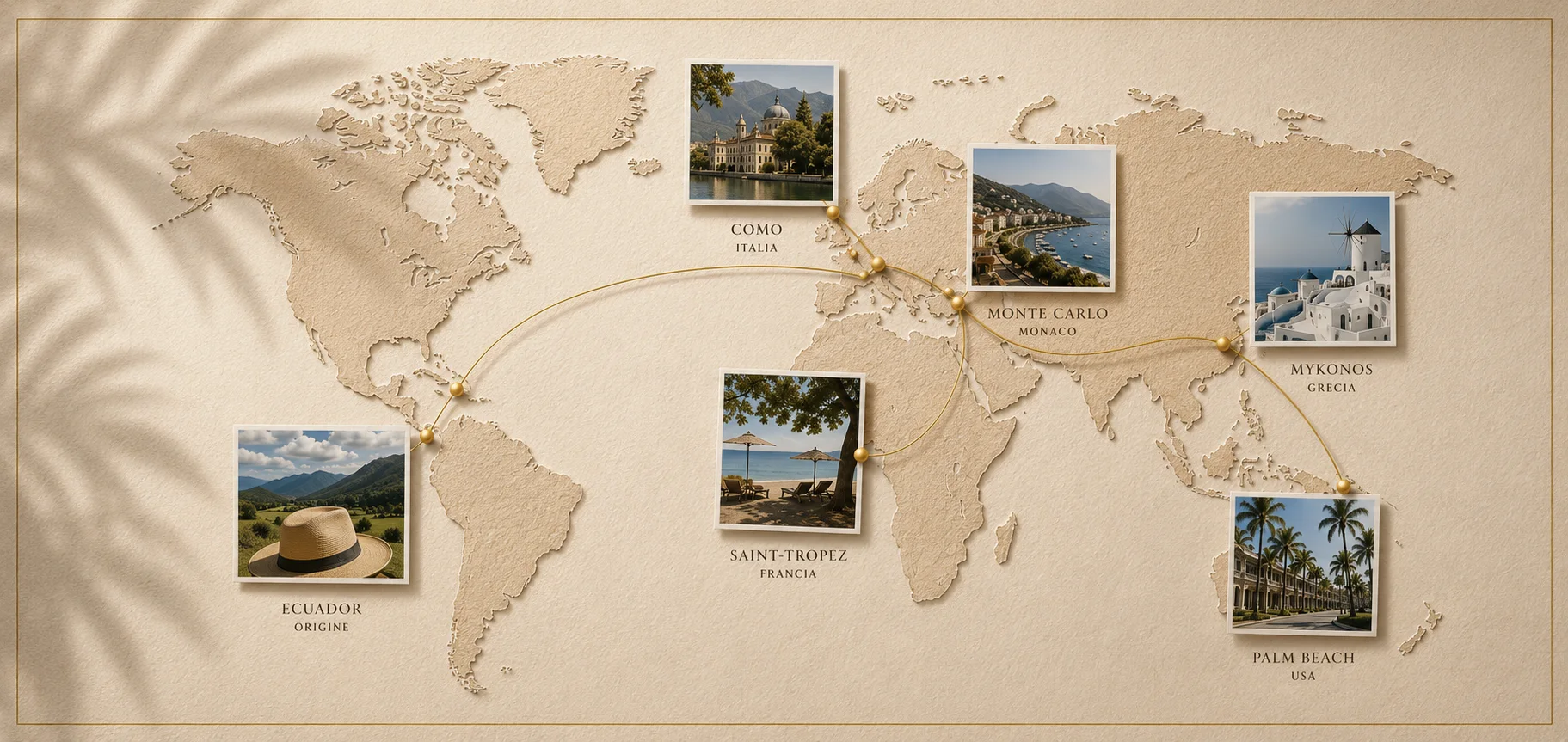
He imagined them on the terraces overlooking Lake Como.

Inside Mediterranean resorts.

Along the fairways of world-class golf clubs.

On the decks of yachts leaving the harbour.

In hotel lobbies crossed by travellers arriving from every corner of the world.

Places where elegance is never displayed.

It is simply lived.

And so the hats began to travel.

They reached Villa d’Este.

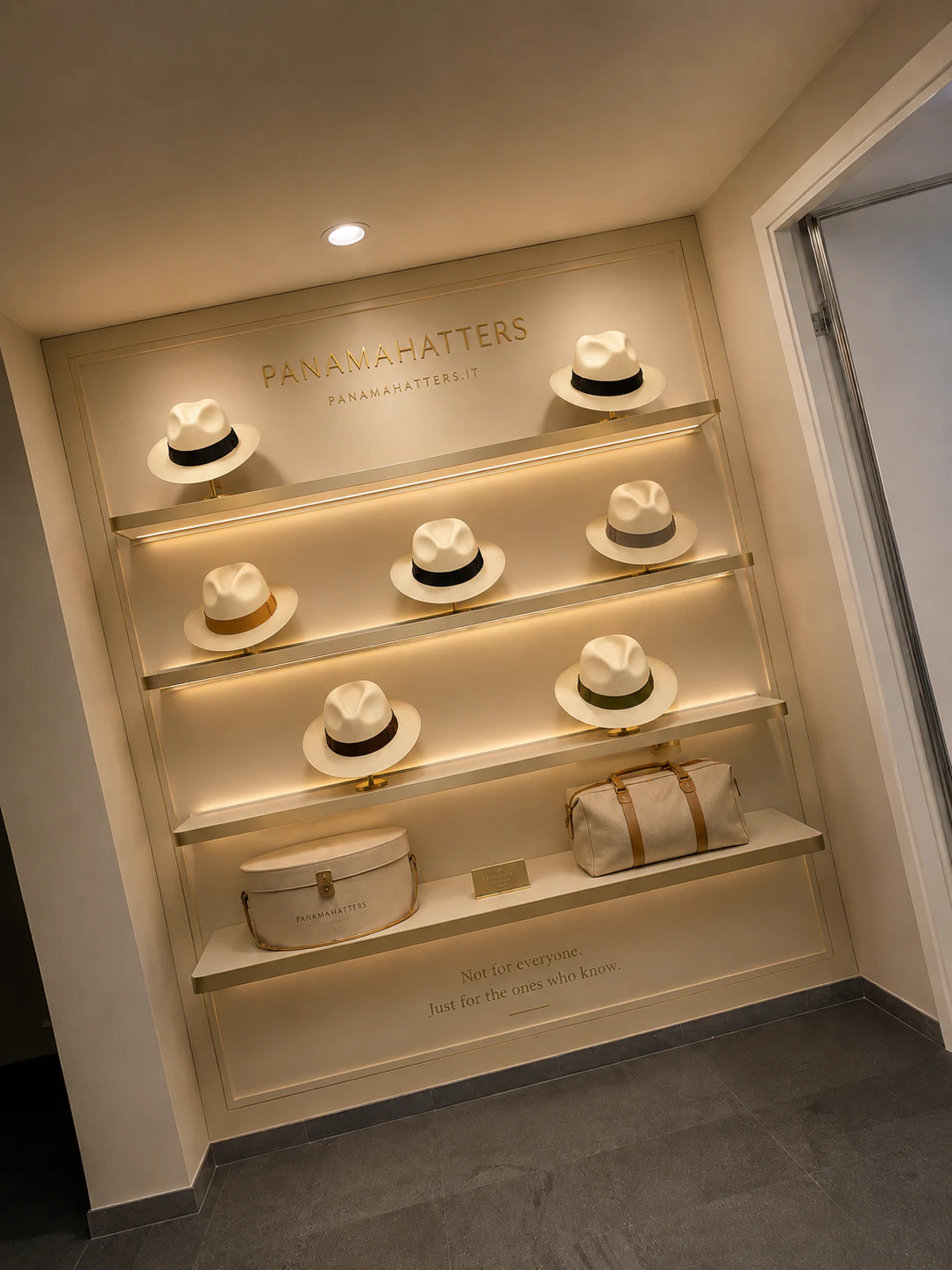
They entered the world of Belmond, from Cipriani Venice to Splendido, Caruso and Sant’Andrea.

They appeared in international hotels, resorts, golf clubs, wellness destinations and private clubs chosen not for their visibility, but for their character.

Later came collaborations and projects connected with names such as Ferretti, Lamborghini, Campari, and the prestigious world of Monte Carlo yachting.

The intuition had become reality.

An authentic Ecuadorian Panama, guided by an Italian vision, had found its natural place among some of the world’s most iconic destinations.

“I never wanted Panama Hatters simply to be sold. I wanted it to be discovered during a journey.”
Marco Tibiletti, Mr. Panama

RECOGNITION

WHEN MARCO BECAME MR. PANAMA.

The name was never created around a meeting table.

It arrived naturally.

Through the journeys.

Through the artisans.

Through the collections.

Through the hotels, the clients and the people who no longer associated Marco with a single product, but with an entire world.

He had become the man who knew the origin.

The man able to recognise the quality of a weave by touch alone.

The man who understood how an ancient object could enter contemporary life without ever losing its authenticity.

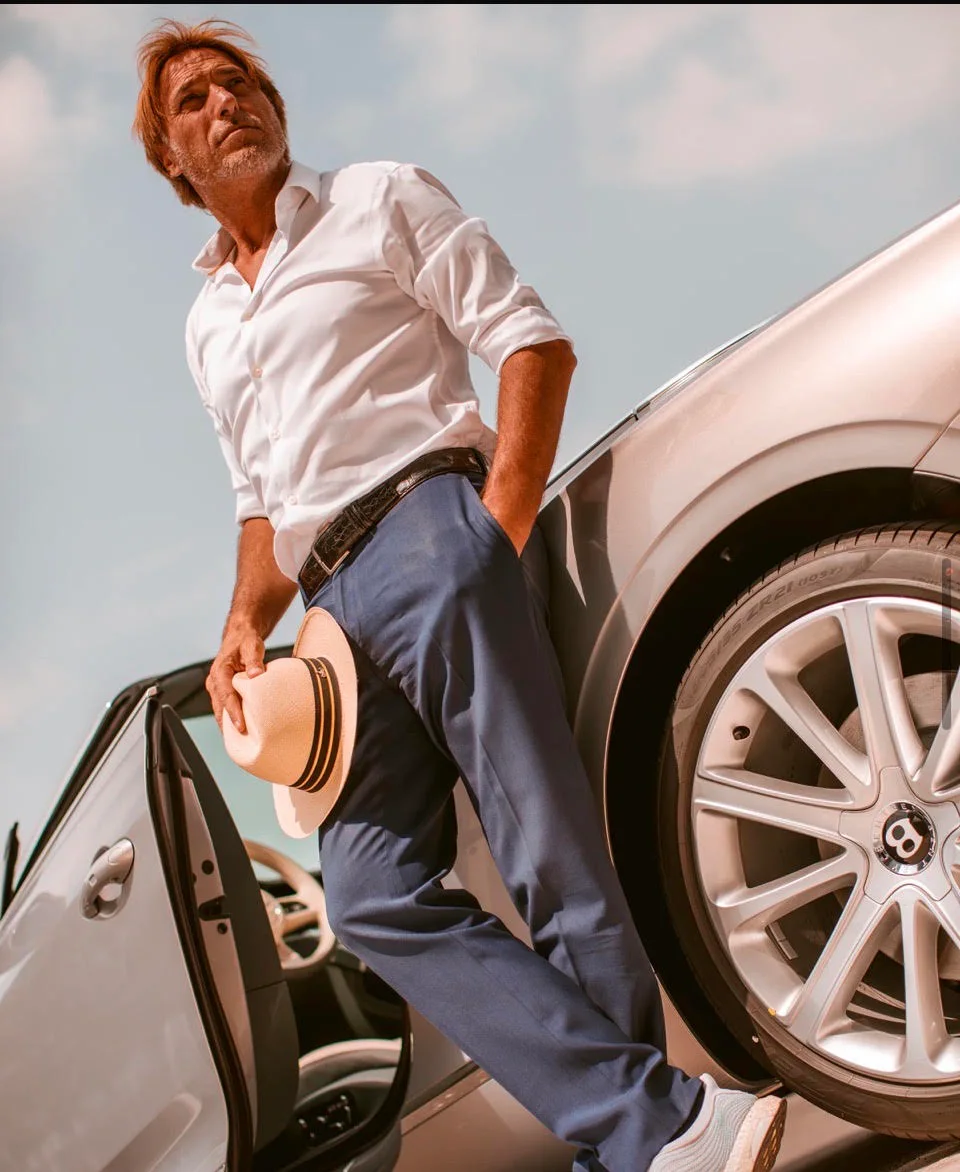
Marco became Mr. Panama.

Not as a character.

But as recognition.

It was no longer a nickname.

It had become a signature.

LUXURY

A DIFFERENT IDEA OF LUXURY.

For Mr. Panama, luxury has never been about excess.

It is the opposite.

It is knowing where something comes from.

Understanding how it has been made.

Recognising quality before anyone needs to explain it.

It is the lightness of a hat that almost disappears once worn.

The imperfect perfection of something shaped entirely by human hands.

The way an object slowly becomes part of the person who lives with it.

An authentic Panama is not meant to remain untouched.

It travels.

It absorbs sunlight, sea breeze and memories.

With time, it becomes even more personal.

It does not simply complete an outfit.

It begins to reveal the person wearing it.

Marco Tibiletti, founder of PanamaHatters

THE MAISON

THE MAN BEHIND THE MAISON.

Today, Mr. Panama continues to guide the world he created.

He imagines every collection.

Studies every proportion.

Selects every fibre, ribbon and detail.

Develops projects for hotels, resorts, yacht clubs, golf clubs, international companies and private events.

But his role goes beyond creative direction.

He remains the bridge between origin and destination.

Between the artisan weaving a Panama hat in Ecuador and the traveller who will one day wear it beside a lake, on a Mediterranean island, aboard a yacht or in a distant city.

Every Panama Hatters creation carries that journey.

The hands that created it.

The eye that interpreted it.

The destinations it is meant to reach.

Because Panama Hatters carries more than the name of its founder.

It carries his way of seeing the world.

THE FUTURE

THE JOURNEY CONTINUES.

What began with a conversation in Milan became a bridge between continents.

A fibre became a collection.

A collection became an identity.

An identity became a Maison.

Yet for Mr. Panama, the story has only just begun.

There are still new artisans to meet.

New ideas to explore.

New destinations waiting to be discovered.

And somewhere in the world, far from where everything began, another traveller is about to discover Panama Hatters for the very first time.

Perhaps in a hotel overlooking the sea.

Perhaps aboard a yacht.

Perhaps beneath the sun of a place they will never forget.

They will first see the hat.

Then they will touch it.

And without anyone telling its story, they will immediately recognise that it comes from somewhere genuine.

MR. PANAMA

A HAT CAN COMPLETE AN OUTFIT. THE RIGHT HAT REVEALS A PERSON.

Crafted in Ecuador. Seen through an Italian eye. Created to travel.

“I never wanted to create something for everyone. I wanted to preserve something authentic for those who still know how to recognise it.”

INTERVIEW

A CONVERSATION WITH MR. PANAMA.

The Man Who Gave the Panama Back Its Journey

Some objects belong to fashion. Others move through time.

The Panama belongs to travel, to light, and to the places that remain in our memory. Marco Tibiletti encountered it almost by chance, but chose to follow it all the way back to its origins.

From Paris to the forests of Ecuador. From the hands of master artisans to the world’s finest hotels. From a personal intuition to a brand now recognised through the identity of its founder.

To many, Marco simply became Panama.

To others, Mr. Panama.

01

Marco, who were you before becoming Mr. Panama?

Before Panama Hatters, I was already living within the world of image.

I worked as a model, a fashion photographer and in public relations. They were different experiences, yet they all taught me the same thing: how to observe.

I learned to recognise proportion, presence and the way a single detail can completely transform the perception of a person.

I moved through fashion, events and great hotels—places where true elegance never needs to announce itself.

But I did not want to spend my life merely interpreting the image of others.

I felt the need to create something with an identity of my own.

02

When did the Panama Hatters journey truly begin?

In Paris, in 2012.

I met one of Ecuador’s most accomplished artisans. It was more than a professional encounter. Through him, I began to understand that behind the Panama hat existed a world far deeper than what was usually displayed in shop windows.

He later introduced me to the Ecuadorian Consul in Milan.

From that moment, I began following a thread.

One year later, I was in Quito and travelling through the areas of Ecuador where Toquilla fibre is prepared and woven. I saw entire families working by hand, repeating gestures passed down from one generation to the next.

There were no machines, no noise and no communication strategy.

There was time.

There were hands.

There was ancient knowledge.

At that moment, I understood that I had not simply discovered a product to sell.

I had encountered a story to protect and an identity to return to the world.

03

What did you see in those families as they worked?

I saw something contemporary fashion is often in danger of forgetting: the value of time.

Every fibre was prepared, worked and woven through a craft that cannot be accelerated without losing its authenticity.

For those families, there was no clear separation between work, culture and life. Weaving was part of their history.

I understood that a true Panama hat does not begin when it appears in a boutique.

It begins much earlier.

It begins in the land, in the fibre, in patience and in the hands of those who have understood the material for generations.

That is where Panama Hatters still begins today.

04

Why did you choose to bring Ecuador and Italy together?

Because they possess two very different yet complementary qualities.

Ecuador protects the origin, the fibre and the wisdom of the weave.

Italy possesses an instinctive culture of proportion, design and elegance.

I never wanted to transform an Ecuadorian creation into something it was not.

I wanted to respect its soul and reinterpret its presence through an Italian eye.

Ecuador creates its authenticity.

Italy gives it a new presence.

Panama Hatters was born precisely from this encounter.

05

What was your defining intuition?

Understanding that the Panama should never be presented as a simple summer accessory.

It had always been much more than that.

The Panama had travelled across continents, eras and ports. It had been worn by men and women capable of leaving behind a precise image of themselves.

Yet over time, it had been reduced to little more than a seasonal product.

I wanted to restore its meaning.

Not to create another hat, but to return the true Panama to the world where it belonged: travel, personality and recognisable elegance.

06

Borgo Egnazia was the first important destination to believe in the project. Why did the journey begin in a hotel?

Because the Panama belongs first to an experience.

Borgo Egnazia was an important confirmation. It was not simply a prestigious place. It possessed its own atmosphere, its own identity and a very precise way of welcoming travellers.

There, I understood that the right path did not necessarily begin with traditional boutiques.

It began in places where people were already experiencing something meaningful.

A great hotel does not simply sell a room.

It gives you a memory.

And a Panama discovered during a journey never remains merely a hat. It becomes part of that place, that light and that particular season of life.

This is why Panama Hatters grew within hotels, resorts, yacht clubs and destinations chosen by international travellers.

Our client is not simply looking for a product.

They are looking for something that belongs to the world they are experiencing.

07

Who is the Panama Hatters traveller?

They are not defined by age, nationality or spending power alone.

They are defined by the way they choose.

They are accustomed to travelling, yet still capable of being moved by discovery. They recognise quality without needing it to be explained and prefer objects with an origin over things designed merely to be seen.

They may be on Lake Como, in Mykonos, in Monte Carlo, aboard a yacht or at a golf club.

The place changes.

Their attitude remains the same.

They do not need to appear in order to be recognised.

Panama Hatters is created for this kind of traveller.

08

What makes a Panama truly authentic?

First of all, its origin.

Over time, the name Panama has created a great deal of confusion. But an authentic Panama hat is born in Ecuador, made from Toquilla fibre and woven entirely by hand.

Its form does not make it authentic.

Its story does.

Then come the quality of the fibre, the regularity of the weave, the time required to create it and the ability of the artisan.

Some hats can be completed in a matter of days. The finest Montecristi pieces may require months of work.

Authenticity cannot be added at the end like a label.

It must be present from the very beginning.

09

Today, your name has become almost inseparable from the Panama. How was “Mr. Panama” born?

I did not choose it.

After several years, clients, collaborators and people I met during my travels began spontaneously calling me “Panama.”

Then came “Mr. Panama.”

I believe it happened because they no longer saw me merely as the owner of a brand or as someone selling hats.

They associated me directly with that world.

With travel, Ecuador, the artisans, the hotels, the collections and a particular way of interpreting the Panama.

When a name is given to you by others, it carries a different meaning.

Mr. Panama is not a character that was created.

It is the natural result of a story lived over many years.

10

What does Mr. Panama represent today?

A way of seeing.

He is the man who travels, observes, selects and recognises the things that possess a soul.

He is not necessarily the loudest person in the room.

Very often, he is the one who is remembered.

Mr. Panama no longer refers only to me.

He has also become the symbol of our traveller: free, curious, international and secure in his own identity.

Someone who does not wear an object to prove something.

He chooses it because it represents him.

11

What happens when someone wears a Panama Hatters?

The hat completes the image, but more importantly, it reveals an attitude.

A Panama changes the way the face is framed, the posture and even the way a person enters a room.

But it should never feel like a mask.

The right hat does not conceal who you are.

It makes you immediately recognisable.

Over time, it also follows the person who wears it. It softens, adapts and gathers the traces of each journey.

Authentic objects should not remain untouched and perfect.

They should live.

That is how they acquire character.

12

What is your idea of elegance?

I deeply identify with the idea expressed by Giorgio Armani: elegance is not about being noticed, but about being remembered.

It is a fundamental distinction.

Attracting attention may last only a moment.

Remaining in someone’s memory requires identity, balance and consistency.

Elegance has no need for excess, ostentation or oversized logos. It may live in a gesture, in a proportion, in the way someone wears a hat or crosses the lobby of a great hotel.

It should never ask to be looked at.

It is simply recognised.

This is also the idea of elegance upon which I built Panama Hatters.

13

Is Panama Hatters a hat brand, or something more?

The hats are the beginning.

But Panama Hatters is intended to represent an entire world shaped by travel, identity and presence.

I do not want people to enter our universe thinking only about what they might purchase.

I want them to recognise a way of living: choosing the right places, respecting craftsmanship, embracing discovery and moving freely without losing one’s identity.

We are not building an ever-larger catalogue.

We are building an increasingly recognisable language.

A world you enter.

Not simply a product you buy.

14

What does luxury mean to you?

Luxury is not about owning many things.

It is about being able to choose the right ones.

It is the time required to weave a fibre by hand. It is knowing the origin of what you wear. It is entering an extraordinary place and immediately feeling at ease.

True luxury does not need to be continually explained.

It is felt.

That is why I do not dream of seeing Panama Hatters everywhere.

I prefer to find it in the places where it can truly be understood: great hotels, resorts, yacht clubs, golf clubs and destinations capable of creating lasting memories.

Exclusivity does not come from keeping people away.

It comes from remaining precise in what you choose.

15

What is your vision for the future?

To make Panama Hatters the international reference for those seeking the authentic Panama, interpreted through Italian design and elegance.

I do not want to lose the origin in pursuit of growth.

I want to grow precisely because of that origin.

The future will bring new destinations, collections dedicated to travellers, collaborations with hotels and special projects capable of bringing together craftsmanship, innovation and personalisation.

But the centre will remain unchanged.

A natural fibre.

The hands of an artisan.

An Italian eye.

And someone ready to depart.

16

What would you like people to remember after encountering Panama Hatters?

I would like them to remember a feeling.

Not necessarily the moment of purchase, but the place where they encountered their hat.

A terrace overlooking the sea.

A summer on Lake Como.

An island.

A journey by boat.

A golf course.

A person.

Years later, when they hold that Panama again, should it return them to that moment, then the hat will have acquired its most authentic value.

Because truly meaningful objects do more than accompany our image.

They preserve a part of our lives.